


Refik Anadol: “At Dataland, the museum is the artwork”
par David Hanau15.06.2026

On June 20, inside Frank Gehry’s Grand LA, Refik Anadol opens Dataland, which he calls the world’s first museum of AI art. Weeks before the launch of its inaugural exhibition Machine Dreams: Rainforest and an unprecedented olfactory collaboration with L’Oréal Luxe, the Turkish artist conversed with us to talk about buildings that dream, about his own AI — the Large Nature Model — and about the question that runs through the whole project: can an artwork feel us back?
David Hanau: You call Dataland the world’s first museum of AI art. For you, what does it change to give a permanent home to an art form that, by its very nature, regenerates in real time? Can we still speak of a collection when the work is never the same twice?
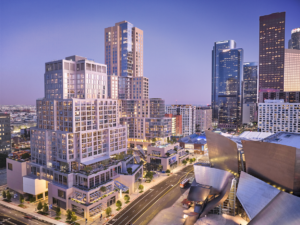
Refik Anadol: “For almost ten years I’ve been working in this medium, with institutions like MoMA, the Guggenheim, the Centre Pompidou, the Serpentine. At some point it felt right to turn that idea into a real laboratory for imagination. Los Angeles imposed itself: a city that embraces innovation, architecture, cinema, music. We found the space two and a half years ago, at the Grand LA, Frank Gehry’s building — my hero. We’ve worked together four times in ten years; I think of him as a mentor, and he gave the project his blessing. So we conceived this place around a single question: what happens if the museum can dream? The technology is written into the DNA of the building: machine intelligence, sensor systems, a true thinking brush. For five thousand years we’ve looked at a work and felt something. At Dataland the question becomes: can the work feel us back? But we didn’t do it for the technology, we did it for society — ethical data sources, sustainable energy, algorithms we worked hard to demystify and explain. And Dataland forgets the data: nothing we collect from visitors is kept.”
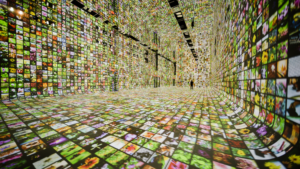
DH: The Large Nature Model is trained on the intelligence of nature rather than on human thought, unlike your earlier works at MoMA or with the LA Philharmonic. What did you discover about what a machine can dream of when you feed it flora, fauna and fungi?
RA: “That’s the most inspiring part of the LNM. Three years ago, when the first large language models arrived, I was questioning them about the Amazon. I have an immense respect for nature — like Monet, who drew his inspiration from it; I don’t work so differently from him. I want to understand it, to talk with it. But we can neither harm it nor forget it. The LNM was born five years ago, when I was invited to the Amazon, to the Yawanawá, an Indigenous people. Their chief, Nixiwaka, and their cultural leaders allowed my partner Efsun and me to immerse ourselves, to understand life through their eyes. From there came the idea: to create an AI model with their permission and with respect, to conceive it for society and for humanity, and then to make art and research with it. We received half a billion images, largely from the Smithsonian archives — one of our dearest partners. Google Cloud let us run everything on sustainable energy. And we traveled to sixteen rainforests to collect our own data: drones, images, sounds, 3D LIDAR scans. More than 20% of the corpus comes from our own images. Machine Dreams: Rainforest, our first exhibition, rests on that model. We also work with the MIT Media Lab and Professor Rosalind Picard, a pioneer who invented affective computing — the branch of technology that lets sensors read the body’s signals. Through her technology, Empatica, we capture the audience’s emotions. It’s the first time human emotion, an ethical AI and sustainable computing come together to create a work.”
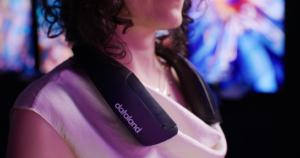
DH: You’ve long worked with image and sound. With L’Oréal Luxe, you’re adding scent. What does olfaction offer that 1.5 billion pixels cannot?
RA: “Olfaction is probably the most underused form of art-making there is. In the art world it’s very rare to compose scent molecules with real research, real experimentation behind them. Last year we welcomed the L’Oréal team to Los Angeles, showed them the studio, told them the Dataland dream. The synergy was perfect, the team wonderfully open-minded. We invented a diffuser we call Lumin, which reads the visitor’s emotion and their position in the museum: close, far, sitting, walking, contemplating. Nothing about the diffusion is random. Working from the LNM, we developed twelve accords that tell the story of the museum, and L’Oréal’s expertise turned them into molecules. The system knows exactly where you are and what you feel, and it gives rise to a new connection, a new emotion. Scent is one of the oldest languages of humanity, the only one that short-circuits the logical mind and goes straight to memory. The journey unfolds across five galleries. You begin by connecting your device, and the first thing you smell is landscapes. Then comes the Data Pavilion and its eight molecules — magnolia, roots, moss, the smell of rain, petrichor. Then, in the Infinity Room, we tell the myth of the glass hummingbird, a Yawanawá legend: a dream I had in the forest, which we visualized. You become that bird, you smell the forest through its eyes, its ears, its nose. And the last gallery, the Sanctuary, is a place for reflection: that’s where the dream happens. At MoMA, I let the archive dream. At Dataland, it’s the work that observes the audience’s emotions and paints a new picture. It’s in that room that L’Oréal pulled off a tour de force: we smell the Moonflower, a flower that blooms for a single night in the Amazon. They managed to capture its molecules without harming the flower, through a technology called Headspace. That’s our grand finale.”
DH: Bringing a luxury house like L’Oréal inside a museum raises the question of the work’s autonomy from the brand. How do you make sure the art doesn’t become a showcase for marketing, but stays art?
RA: “The risk is zero. I’m deeply grateful to L’Oréal: they behaved as partners, as collaborators — like artists, not like a company. At every step they respected the concept with extreme care. I felt privileged, as in an artist’s dream: to climb into the molecules and reinvent a world. There was nothing commercial about it; it was innovation and discovery. We had the dialogues of enthusiasts, we learned a great deal from one another. Today we write code together. It wasn’t a commercial partnership, but a partnership of innovation.”
DH: After the Serpentine, MoMA, and now your own museum, do you think you hold the model for the museum of tomorrow? Or is it an experience that only makes sense here, at Dataland?
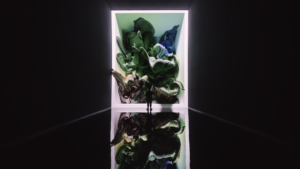
RA: “As a digital artist, I want to elevate our medium. There are many of us using AI, and I’d like us to have a compass, a place to innovate and to show the world what digital art means. Our mission isn’t limited to making works: there’s education, lecture series, a collection, residencies — four artists will soon be joining us. It’s a place built for experimentation. We remain a modest institution, we’re not a giant, but I believe there’s a new way here of looking at the museum, at creation, at technology. The pace of innovation is sometimes too fast, and museums can fall behind. At Dataland, we want to set a benchmark. I often say it: here, the museum is the artwork.”
Photo: Artist Renderings of Machine Dreams: Rainforest, DATALAND, Los Angeles, CA, June 20, 2026
– January 31, 2027. © 2026 Refik Anadol Studio on behalf of DATALAND. Photo: Refik Anadol
Stu
