


Rencontres d’Arles 2026: When Photography Rereads the World
par Yaël Hirsch12.07.2026

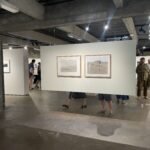
With its ambitious theme, “Worlds to Be Reread,” and its connection, at the gates of the Camargue, to the Mediterranean Season, the 57th edition of the Rencontres d’Arles once again transforms the city into a vast open-air museum, where photography takes over streets, churches, industrial buildings, and historic sites every summer. Spread across 12,000 square metres, the festival manages to embrace an extraordinary breadth while maintaining remarkable precision: its 47 exhibitions are, for the most part, carefully curated, clearly framed around strong ideas, and enhanced by striking scenographies. A true delight for photography lovers and for all curious minds.
The Art of Precision
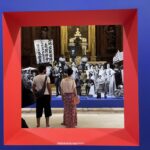
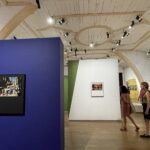
Amid its ever more thoughtfully curated exhibitions—almost all accompanied by bookshops (and lemonade stands)—this year’s Rencontres d’Arles brilliantly delivers on its central theme: rereading the world. In that respect, one of the festival’s essential exhibitions, This Way to Heaven, dedicated to William Klein, is emblematic. Focusing on the political commitments of the photographer, who died in 2022, the exhibition remains sharply focused on one major aspect of both his work and his life. The result is striking, thanks to a breathtaking scenography that radically transforms the use of a sacred, complex, and sublime space.
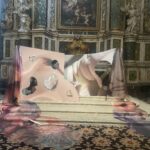
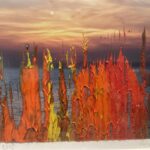
Likewise, slightly on the fringes of the festival, the exhibition devoted to Gerhard Richter at the LUMA Foundation is far more than yet another presentation of the late, prolific, and highly celebrated artist. It articulates a genuine argument about his painted photographs, supported by an installation whose playful irreverence evokes the world of postcards.
The Weight of Themes, the Pedagogy of Photography
Children, flowers, animals—notably the magnificent exhibition Animal Model, spanning two centuries of photography at La Mécanique Générale, and even extraterrestrials (We Are Not Alone at Espace Croisière) all take centre stage. So what is the secret of the Rencontres? How does the festival revisit subjects and artists that have already been explored countless times, yet still confront us with such force and fresh questions?
The answer probably lies in its remarkable ability to make full use of the photographic medium it has championed for decades with intelligence, openness, and passion. Photography illustrates, documents, and narrates—and the festival exploits these qualities brilliantly.
One of the most acclaimed exhibitions, for example, explores Ghana’s independence. Curated by Damarice Amaro, it covers roughly thirty years of photographs taken before and after the country’s declaration of independence in 1957. Remarkably, the exhibition barely mentions Britain or even the former Gold Coast, yet it immerses visitors in the evolving visual history of Ghana with the depth and rigour of an academic dissertation.
Rather than offering another broad denunciation of colonialism, the exhibition focuses on independence itself and on the construction of a nation. Through a rich variety of photographic materials, it makes sophisticated historical research accessible to everyone. Instead of simply condemning, it deconstructs and reconstructs narratives, presenting as many perspectives as possible. Visitors discover the collaboration between the English photographer Willis E. Bell and the Ghanaian educator and poet Efua Sutherland. The exhibition also includes artistic reinterpretations beginning in the 1960s by Denise Gawu Mensa, Carlos Edu Tawiah, and, notably, the Postard Ghana collective, whose work documents nation-building through postcards.
Major Monographic Exhibitions…
Through its invitation to “reread worlds,” the Rencontres places today’s political and identity debates within a longer historical perspective by highlighting lesser-known figures who had already begun questioning dominant narratives decades ago.
Nothing is accepted at face value. Even children’s picture books (including those created by Edward Steichen and his wife) are subjected to close analysis in the fascinating exhibition R is for Looking at Espace Van Gogh. Steichen reappears elsewhere, too: his relationship with flowers is carefully reassessed at La Mécanique Générale, while Lisa Oppenheim offers an AI-enhanced reinterpretation of his work.
…Its Enduring Passion for the Seventies…
A similarly subtle yet determined deconstruction unfolds at Saint-Denis Church with the shadowy Black bodies photographed by Ming Smith. Gathered under the beautiful title Nomadic Glow and elegantly displayed against mauve walls, her blurred photographs, which dissolve the boundaries of bodies, are a remarkable discovery. They also offer a compelling example of the female gaze emerging as early as the 1970s.
The 1970s—the decade that witnessed the rise of the “new social movements”—are omnipresent throughout the festival, yet never reduced to cliché. Paul Kodjo’s work, presented at Espace Croisière, transports visitors into a black-and-white love story unfolding in Abidjan. Nearby, at the Maison des Peintres, the portraits of his grandmother gradually losing her memory by photographer Aman Alam quietly dismantle conventional ideas of identity.
Martine Barrat’s retrospective deserves to restore the photographer to the forefront of our collective imagination through her extraordinary portraits of working-class New York during the 1960s. Meanwhile, at the Chapelle du Méjan, Harry Gruyaert‘s lens seems to transcend time itself, giving an Arles street scene the contemplative depth of a Chicago cityscape painted by Edward Hopper. By illuminating hundreds of everyday moments across countless cities with his distinctive light, Gruyaert was already questioning globalization, as early as the 1970s.
…And a Genuine Invitation to Rediscover the World
Our favourite retrospective among the festival’s satellite exhibitions is devoted to the work of Alain Keler. In a memorable installation scented with chlorine and built around the journalist’s introspective diary, this son of Holocaust survivors takes us on a photographic journey from the 1980s to the present, driven by an unwavering urgency to bear witness.
That invitation resonates beautifully with the literary journey proposed by the writer Natacha Appanah in the extraordinary exhibition of travelling photographers, Our Distant Dreams.
Finally, memory itself must not be forgotten—a proposition at the heart of Clément Cogitore‘s Memory Palace. Presented at Espace Van Gogh as a 35-minute slideshow-like film, the work assembles thousands of amateur video clips into several chapters. Assisted by artificial intelligence, Cogitore reflects with remarkable tenderness and intimacy on what we choose to preserve—and what we inevitably lose—as time passes.
Between dreams and palimpsests of our readings of the world, photography illustrates history while preserving the traces of those whom history too often forgets. Through its broad vision, its long historical perspective, and its precise curatorial focus, this 57th edition of the Rencontres d’Arles achieves a remarkable coherence and beauty. It deserves to be seen—and reflected upon.
photos : YH

